Ramadan is a significant and sacred time for millions of Muslims worldwide. It is a month of reflection, community, and devotion. For the travel and hospitality industry, it presents a unique opportunity to demonstrate true inclusivity. During this month, Muslim travellers actively seek service providers who go beyond the basics, offering inclusive experiences that combine Halal offerings with culturally sensitive services. By understanding and anticipating these needs, hotels can transform a standard stay into a meaningful spiritual journey.
CrescentRating’s Ramadan Hospitality Essentials Webinar provided the following guide for every modern hotelier wanting to welcome Muslim guests in Ramadan.
To serve Muslim guests effectively, one must understand the rhythm of their day during this holy month:
This sacred month is the ninth month of the Islamic calendar, marking the period when the Quran was first revealed. In Ramadan, all Muslim adults are obliged to fast, as it is one of the five pillars of Islam. During the fasting period from dawn to sunset, Muslims will be abstaining from all food and drink (including water).
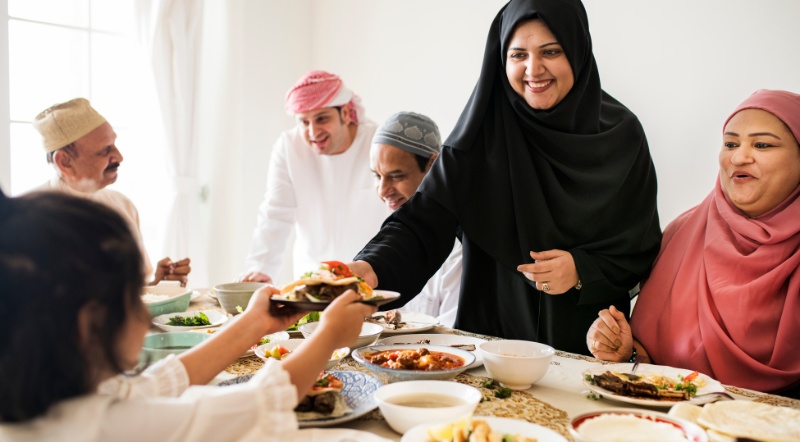
To prepare themselves for the day’s fasting period, Muslims will have Suhoor (Sahur), which is a pre-dawn meal taken before the fast begins. At the end of the day, when the sun is beginning to dim and the time for Maghrib prayer comes, Muslims will have an Iftar, where they break the fast at sunset, usually starting with dates and water. After a full month of fasting, Muslims will have a day of celebration during the Eid Al-Fitr, where they will have an Eid prayer and traditionally meet with family members and their community for celebratory feasts and strengthening of bonds.
To set up a truly inclusive experience where Muslim visitors would feel welcomed, it is important for hotels to make certain preparations, as Muslim guests have specific needs that they would have to rely on the accommodation’s service.
The main areas to consider are for Suhoor, Iftar, prayer facilities, and the availability of Halal food in general, where hotels would have to adjust service timing and experience. Standard hospitality models often fail during Ramadan because traditional breakfast hours become irrelevant and the demand for high-quality dining and prayer facilities peaks at non-traditional times. As more Muslims travel during this month, hotels that pivot their service timings and offerings will earn the loyalty of this rapidly growing global market.
Creating a "home away from home" involves physical adjustments to the hotel environment:
Temporary Prayer Space: If a permanent prayer room isn't available, convert a quiet meeting room into a dedicated prayer space. Ensure it is clean, carpeted, and clearly marked with the Qibla (direction of Mecca). This is especially needed near the dining area during Iftar hours, as there is a narrow window to perform the Maghrib prayers, and it coincides with the time guests will break their fast.
Preparing for Tarawih: These are long congregational prayers held every night of Ramadan. Providing a shuttle to a local mosque or hosting a small led prayer on-site is a significant value-add.
Preparing for Eid al-Fitr: This is the "Festival of Breaking the Fast" marking the end of Ramadan. Hotels should prepare for a surge in celebratory bookings and festive brunches.
Giving in Charity (Zakat/Sadaqah): Charity is central to Ramadan. Hotels can partner with local NGOs to allow guests to donate their "unused" breakfast buffet portions or contribute to local food drives.
The "human" element is what defines luxury hospitality during Ramadan:
Cultural Sensitivity Training: Staff should understand not to offer food or water to fasting guests during the day and be aware that guests may be more tired than usual in the late afternoon.
Ramadan Decorations: Use subtle, elegant decor like lanterns (Fanous), crescent moons, and stars to create a festive yet peaceful ambiance.
Proactive Support: Instead of waiting for a guest to ask, place a "Ramadan Kit" in the room containing a prayer mat, a list of local mosque locations, and a timetable for Suhoor and Iftar.
Entertainment Guidelines: Keep entertainment sensitive to religious considerations. For example, try to avoid shows such as belly dancing, as culture is not the same as religion.
Ramadan is traditionally viewed in three ten-day segments (Ashras) with different focus areas:
Days 1-10 (Mercy): Guests are adjusting to the fasting routine. Focus on comfort and ease.
Days 11-20 (Forgiveness): The routine is established; community events and Iftar gatherings become more frequent.
Days 21-30 (Seeking Refuge): The most spiritually intense period. Many Muslims spend more time in prayer, especially at night. Expect a high demand for late-night services and quiet environments.
There are a few tips on what the hotels should prepare to optimize their Ramadan service:
Not all Ramadan business comes from travellers. Residents and Muslim-owned businesses often look for hotels to host family Iftars or "staycations" during the first 20 days. To attract these guests, service providers can offer Iftar packages, group Iftar catering, and prayer space setup.
The focus for this approach is to enhance the experience of Muslim guests staying at the hotel. Offer "Suhoor Room Service" as a standard part of the stay, delivered 1-2 hours before dawn, create charity initiatives for guests to participate in, and provide exclusive Ramadan services, such as special room amenities, flexible check-in/check-out, and discounts for longer stays. These offerings would matter most for business travellers, leisure travellers, and long-stay guests.

Ensure the entire supply chain is Halal-certified. Avoid cross-contamination in kitchens and clearly label Halal items on buffets. To make it clearer, hotels can refer to CrescentRating’s Halal Dining Assurance Spectrum above.
Ramadan traditions and practices vary by geography, and recognizing this shows a high level of sophistication and would add value to the guests’ experience.
Never assume based on appearance. Instead, offer a "Ramadan Welcome Pack" at check-in to all guests or ask, "Would you like to know more about our Halal dining options?”
The goal is integration, not isolation. Inclusive hospitality means these services should feel like a seamless part of the hotel’s excellence, rather than an 'extra' or an outlier.
It is considered traditional to break the fast with dates and laban, and Eid in the Middle East usually would be celebrated with local delicacies such as kahk and maamoul. With guests coming from this region, focus on providing their popular foods, like classic lentil soup, stuffed dates, and chicken shawarma.
In Indonesia, Malaysia, and Singapore, breaking fast is called “Buka Puasa”, where families and friends gather to eat various dishes. During Eid, the festive dishes that would usually appear in everyone’s homes are opor ayam and sayur lodeh.
Encompassing traditions in Pakistan, India, and Bangladesh, the region’s Iftar offerings usually feature samosas, pakoras, jalebis, fruit chaats, and chana chaat. Their staple dishes for Eid are biryani and sheer kurma.
Inclusive hospitality is not about exclusivity; it is about making every guest feel seen and respected. By implementing these Ramadan essentials—from the timing of meals to the placement of a prayer mat—hotels do more than just provide a room; they provide a sanctuary. As the "New Wave" of young Muslim travellers grows, the hotels that prioritize these culturally sensitive services today will be the ones that earn the loyalty of the global Muslim market tomorrow.
Learn more from our Ramadan Hospitality Essentials Webinar here.