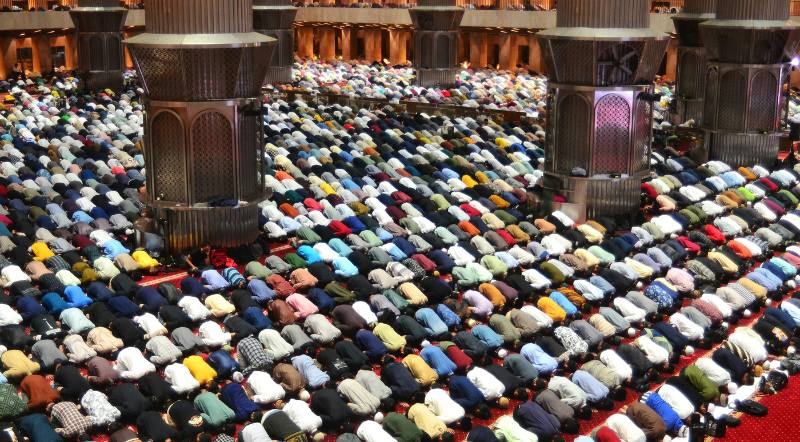
The global landscape is undergoing a significant demographic transformation, with the Muslim population emerging as one of the fastest-growing and most youthful groups in the world. Based on recent projections conducted from our research, the next decade will see this community expand not only in numbers but also in its influence on global social and economic trends.
The scale of growth within the Muslim community is remarkable. By 2026, the global Muslim population is expected to reach 2.2 billion. Looking further ahead to 2036, this figure is projected to climb to 2.5 billion, marking a 14% increase in just ten years.
This growth means that by 2036, Muslims will account for approximately 28% of the total world population. This widespread presence spans over 200 countries, with 49 countries having Muslims as more than 50% of their population; illustrating a diverse global community that contributes to virtually every corner of the planet.
Perhaps the most defining characteristic of this demographic is its age. While many parts of the world are concerned with aging populations, the Muslim community remains strikingly young.
Median Age: The median age of the Muslim population is just 25 years old, making it younger than any other major faith group.
The 70% Factor: An incredible 70% of Muslims are currently under the age of 40.
Future Growth: The population segment under 40 is expected to grow from 1.46 billion to 1.6 billion by 2036.
Young Population: The Muslim population between 20 and 25 years old is projected to grow from 165 million to 181 million.
This youthful energy suggests a future driven by a "youth dividend," where a large, working-age population can drive innovation, civic participation, and economic growth, provided there is adequate investment in their development today.
The Muslim population is concentrated most heavily in Africa and Asia, though it has a footprint on every continent. As of 2026, the regional distribution is projected as follows:
Africa: 43.2%
Asia: 30.4%
Europe: 7.5%
Oceania: 2.3%
North America: 1%
South America: 0.19%
In 2026, the countries with the largest Muslim populations include Indonesia, Pakistan, India, and Bangladesh. However, a significant shift is expected by 2036, when Pakistan is projected to overtake Indonesia to become the country with the largest Muslim population in the world.
The data paints a picture of a demographic that is balanced in gender—roughly 50.6% males and 49.4% females—and deeply integrated into the global fabric. With 49 countries currently holding a Muslim majority, and dozens more with significant minorities, the growth of this population will undoubtedly shape global consumer markets, digital trends, and international relations for decades to come.
For further insights on Muslim demographics and lifestyle behavior, visit our interactive CrescentRating Maps data page here