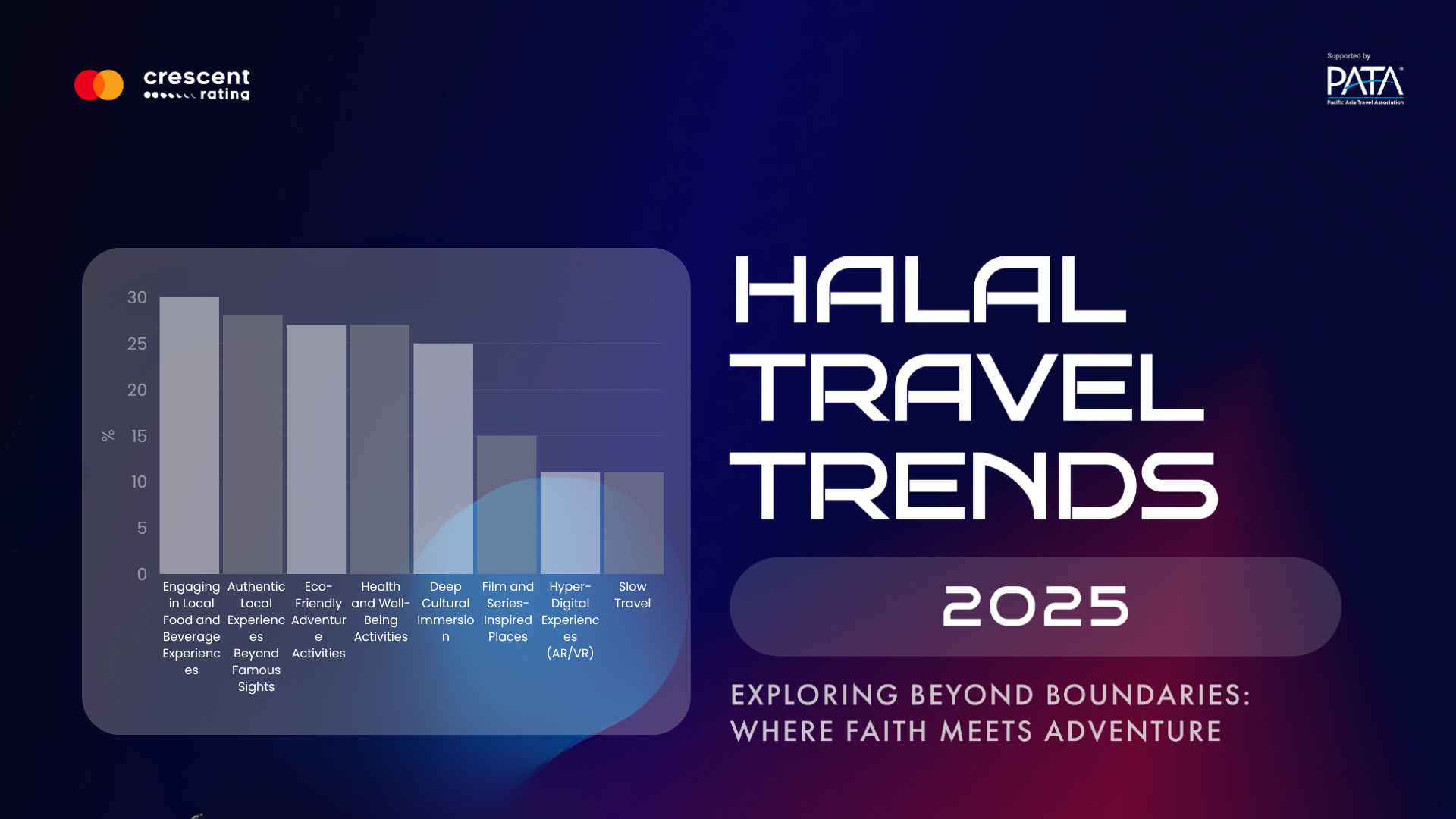
As global travelers increasingly seek experiences that align with their values, responsible tourism has emerged as a defining force shaping the future of faith-aligned travel. In the Halal Travel Trends 2025 report, developed in collaboration between Mastercard and Crescentrating, responsible tourism stands as a core pillar of the RIDA Framework (Responsible, Immersive, Digital, and Assured). This framework highlights how ethics and sustainability are reshaping Muslim travel.
What Does Responsible Tourism Look Like?
Responsible tourism is set to become the new norm due to several factors. Firstly, there’s a growing awareness of the environmental and social impacts of tourism. As information becomes more accessible and travelers become more conscious of their global footprint, the demand for responsible travel options is increasing. Travelers are actively seeking experiences that offer them a deeper connection to destinations, while also ensuring they leave a positive impact.
Travelers today are more informed than ever, actively seeking out experiences that allow them to contribute positively to the places they visit. Whether by choosing accommodations that follow green practices, respecting local cultures, or engaging in locally-rooted initiatives, travelers are recognising that their choices have ripple effects. Social media has also played a key role in spreading awareness, with influencers and thought leaders championing responsible travel as a lifestyle, not just a niche.
Changing the Course of Overtourism
As global travel rebounds post-pandemic, destinations around the world are grappling with the unintended consequences of overtourism. With visitor numbers climbing, some cities and landmarks are feeling the strain, from congested streets and stretched infrastructure to the erosion of local lifestyles and culture. What was once celebrated as a tourism boom now demands careful management to prevent long-term harm.
Governments and city planners have begun to respond with creative, sometimes bold solutions. In Copenhagen, for instance, a programme called CopenPay encourages tourists to use bikes or public transport in exchange for perks, offering a clever nudge towards more sustainable travel behaviour. In Bali, new regulations limit hotel construction to mitigate environmental degradation. These responses mark a significant shift from unbridled promotion of tourism to the cultivation of a more balanced, intentional flow of visitors.
Just as importantly, local communities are being brought into the conversation. Inclusive planning, education on tourist etiquette, and the promotion of under-the-radar destinations are strategies that place community welfare and cultural preservation at the forefront. Within a Halal tourism context, the principles of fairness, balance, and respect offer a valuable framework for managing these challenges while maintaining the integrity of the destination.
Giving Back with Regenerative Tourism
“The shift from sustainability to regeneration is inevitable. Travelers will demand experiences that not only minimize harm but actively restore ecosystems and benefit local communities.”
Sumaira Isaacs
General Manager of Gulf Dunes, Integrated Tourism Expert & Influencer
The concept of regenerative tourism represents a powerful evolution from the earlier sustainability model. Instead of merely reducing harm, regenerative travel aims to leave places better than they were before. It places the role of the traveler as an active contributor to the healing and flourishing of destinations, ecosystems, and communities.
This shift can be seen in the rising popularity of environmental restoration activities. From reforestation efforts and beach clean-ups to visits to ethical wildlife sanctuaries, travelers want to enjoy nature while preserving and restoring it. The experiences are impactful and also very personal, often aligning with faith-based values of stewardship, responsibility, and compassion.
Regenerative tourism also reshapes our understanding of leisure and luxury. Experiences are now defined not by consumption but by contribution, a narrative that resonates strongly with Muslim travelers who seek journeys that are enjoyable and also spiritually rewarding. In this model, ethical interaction with animals, rejection of exploitative souvenirs, and support for local, eco-conscious businesses are essential.
The Ethical Diner: Making Food Choices That Matter
Food has always been a central part of travel. The rise of ethical dining reflects a growing consciousness among travelers who want their meals to reflect their values. For Muslim travelers, this means dining that is wholesome, fair, and ethically sourced.
Ethical diners are increasingly concerned with issues such as animal welfare, environmental impact, fair labour conditions, and food waste. These considerations overlap significantly with Islamic teachings, which promote moderation, compassion, and care in consumption. For example, choosing cage-free eggs or sustainable palm oil is a reflection of deeper ethical commitments.
This intersection of faith and ethics creates opportunities for destinations to stand out. Places that offer Halal-certified meals with traceable, sustainable sourcing are meeting more than dietary requirements which they are aligning with a traveler’s values. Culinary storytelling, waste-conscious cooking, and locally sourced ingredients can turn meals into meaningful, faith-friendly experiences.
A Faithful Future for Travel
As the Halal travel industry matures, adapting to the principles of responsible tourism is essential. Muslim travelers around the world are seeking experiences that reflect their values, honour their identity, and contribute to a better world.
From combating overtourism and restoring ecosystems to embracing ethical dining and empowering communities, responsible tourism offers a path forward where faith and adventure meet with purpose. For the travel industry, this is both a challenge and an opportunity: to meet the demand for journeys that are enjoyable, memorable, and sustainable for the environment and society.
As we move into 2025 and beyond, one thing is clear: responsible tourism is the new norm. Muslim travelers are aware and actively seeking such initiatives.
Prefer to listen? Get the audio summary of this article here.